Showing posts with label anecdotes. Show all posts

Friday, July 09, 2010

Why are foreign bodies foreign?

Unfortunately, like most other doctors, I have retrieved my share of foreign bodies. I obviously appreciate that there are some people who get a thrill out of putting objects inside themselves (and for some others, that thrill extends to having it removed). But as a person who abstains from wearing a watch, ring, necklace, bracelet, getting pierced, tattooed or otherwise mutilated in any way, I just cannot understand or empathise.

The very first foreign body I unfortunately had to remove was as an intern - a deodorant roll-on (cap still intact). Unfortunately the soft plastic and the smooth contours of these objects make them nigh on impossible to grab with a sigmoidoscope and forceps. Thankfully, just as the surgical registrar was about to book theatre for the laparotomy, I managed to grab it with my fingers (under a fair amount of midazolam sedation) and extract the nasty object. My lessons from that incident?
  1. It is amazing how far up a gloved hand can go.
  2. It is possible to endure a plane flight and two taxi rides with a very full rectum.
  3. You don't want to know how it got there.
I still wonder about whether I was the subject of some practical joke the second time. A young 20-year old girl presented complaining that she (or her partner) had lost a condom. Perhaps the lawsuit is still coming, but even after a thorough examination, x-rays and consulting with our friendly gynaecologist I found nothing. In retrospect perhaps I should have just told her to believe the ultrasound.

Since then there have been numerous other rectal foreign bodies of various shop-bought, home-made, and (in one case) almost-flat-battery types. There have been the cotton-bud tips in the ear, the fish hooks in the bladder, and the spoon found after 3 months in a skin fold, bits of unchewed steak in the oesophagus (aren't I glad I learnt to do a rigid scope) , and various foreign bodies in diabetic feet. My favourites have been the apple-stem lodged sideways which removed easily after a flash of inspiration (cut it in half!) and, as an iatrogenic complication, the coronary guidewire tied in a knot inside the aorta. Basically you name an orifice (including those created by doctors) and something bad can get up there.

So here are my top ten tips for dealing with foreign bodies:
  1. Glass is visible on x-ray. It is amazing how revealing a plain x-ray is. Now we have the luxury of CT scans, but if you are ever unsure - just get an x-ray. And failing that an ultrasound.
  2. Unless a rectal foreign body presents as an assault, it is never the first time.
  3. You don't really want to know how or why. Just how to get it out.
  4. The patient never wants it back.
  5. Never poke a sharp object up to retrieve a blunt one, unless you can see exactly what you are doing and are prepared to deal with the consequences. Plaster of Paris can come in handy.
  6. For rectal foreign bodies, before you do the laparotomy (or colotomy), try some bimanual palpation under GA. Often a gentle suprapubic push and two intrarectal fingers will guide it around the sacral prominence.
  7. Just because it came out, don't assume it (or you) did no damage. Keep the patient for observation and/or do a scope.
  8. Prison inmates like to swallow things, usually to get out of the boredom of prison for a few hours. Usually they look impressive on X-ray (e.g. razor blades, screws) but are often harmlessly wrapped in sticky-tape.
  9. If swallowed, occasionally it is easier to let it work its way out on its own.
  10. Sometimes there is nothing there (e.g. fish bones). If you can't find or prove it, it probably won't do any harm anyway.

Friday, April 10, 2009

Meeting Fatigue

 
Where hospital administrators meet... and where doctors meet.

One of the discussion boards I attend recently commented on the usefulness of multidisciplinary meetings. These are typically where one unit has a combined meeting with another unit (often to review cases, radiological imaging, or histopathology) in order to reach consensus views on how to manage a particular case. These are quite valuable tools as they allow cross-fertilisation of ideas, multiple perspectives on a single problem, and a chance to air sometimes unusual options or nut out some difficult, challenging cases.

Sometimes, however, you can go overboard with these meetings - in the past I have often experienced "meeting fatigue" where i typically tune out and either stare blankly into the air or fall asleep (especially in radiology meetings held in a darkened room... it is harder to fall asleep while staring into a microscope but not impossible).

I recall as a neurosurgery registrar I used to walk into the end of the neurology-vascular radiology meeting so that we could start the neurology-neurosurgery radiology meeting which then led into the neurosurgery-oncology radiology meeting then followed on by our orthopaedic-neurosurgery-spinal radiology meeting.

When I switched to Thoracics I realised that the oncologists then split off after this meeting to their oncology-respiratory-thoracic surgery meeting, followed by our thoracic surgery pathology meeting upstairs.

The vascular surgeons, on the other hand, did their own vascular radiology meeting before the neuro-vascular radiology meeting, then went on a diabetic and high-risk foot round and clinic with the endocrinologists and orthopods, followed by a dialysis access round with the nephrologists, before doing their own ward round.

Of course, the oncologists followed neuro-oncology and thoracics-oncology meetings with an upper GI-oncology meeting that afternoon, a colorectal-oncology meeting the next day, a breast-oncology meeting and a urology-oncology meeting, before having a big drug company lunch and flying off to Noosa for the weekend gratis to meet up with the cardiologists.

As far as I can tell, the only specialties that did not have multi-disciplinary team meetings were the ED physicians and anaesthetists. Actually, that is not true - the anaesthetists sometimes went to a surgical-anaesthetics morbidity and mortality meeting, so that leaves the ED physicians on their own.

The bigger the hospital, the more time you seem to spend in meetings and not actually treating patients. Sometimes I think that an "MDT" meeting really means "monotonous, dull time-waster".

Thursday, August 14, 2008

Scan Me, Scan You

"Mrs Burns?"

40 heads turn around in the outpatients waiting area as I call for the next patient. "Mrs Burns?"

A chubby elderly lady stands up with her daughter and they make their way into the windowless consulting room.

It's a fairly standard consultation. Her GP has referred this moderately obese woman in her late 50s with two episodes of colicky abdominal pain over the last six months. An ultrasound shows some small gallstones but no CBD dilatation. LFTs are normal.

It's clear that the problem is not reflux, and it has only happened twice - after Christmas dinner and a big Easter Lunch. Diagnosis: Biliary Colic.

"There's really no need to worry, Mrs Burns. The likelihood is that you will get some discomfort, maybe some diarrhoea, if you eat a very fatty meal, such as fried food. There's a very small chance that the stones could block the bile duct or gall bladder and that you might get inflammation or infection, in which case you would get quite unwell and should come to the Emergency Department. Otherwise, I would only recommend surgery if you were to develop frequent pain whenever you eat."

"Are you sure it's not cancer?" says the daughter. "My boyfriend's father's second cousin's next-door neighbour had pain like this and they found a cancer in his pancreas. He died in agony after five operations. They say it's a hidden killer."

I struggle to keep a straight face. "There is no reason to think that a cancer is there. Your mother's bowel actions are normal. Her weight is, er, stable. The blood tests are normal... at this time. I think it is just the gall stones. I'm happy to keep an eye on things, and if things were to change then I'd consider a CAT scan, but there's no reason to do that now."

"Wouldn't it be too late if she had symptoms? Why not scan her now? We don't want to end up like that bloke on the news." I sigh, silently to myself. Last week a poor chap died of a subarachnoid haemorrhage because the experienced ED physician decided that a 35 year old man with a long history of migraines didn't need yet another CT brain for yet another headache.

I could give the spiel about unnecessary radiation exposure. I could talk about blowing out the public healthcare budget and our taxes on inappropriate investigations. Or I could reach for the request slip.

"Leave the young man alone, dear. He's told us what the problem is. Don't you trust him?"

I smile to myself as I show them the door. The patient herself has let me off the hook, and highlighted the inter-generational change in "health consumer" behaviour. I cross my fingers and hope I'm right.

That was my 100th blog post. I realise that as an irregular blogger it is challenging to build up a large readership but I hope that those of you who happen to stumble upon my blog find it interesting and thought-provoking. Please keep up your comments, as that is the only way to know that somebody actually reads my blog!

Monday, June 16, 2008

Pssst! Pass it on!

A few months ago, one of my private patients took a turn for the worse. She had had a minor procedure which had gone smoothly. Unfortunately, in the several hours after the operation she developed some bleeding under the wound. I was not notified.

I returned the next day to find a tennis-ball sized haematoma, five layers of gauze and combine reinforcement, and a drain bottle that had fallen out. Multiple entries were made in the notes of the increasing haematoma, but no attempt made to contact me.

The patient was, thankfully, not upset or distressed. She was in some discomfort and agreed with me that the safest thing to do would be to return to theatre to evacuate the haematoma later that day.

Unfortunately, my secretary spent the better half of the day trying to track down an anaesthetist without success. Such is life in the private sector. Most private hospitals do not have on-call rosters, because most surgeons have direct relationships with anaesthetists that they use regularly. Unfortunately, none of mine were available at short notice, and in this situation you have to scratch around for anyone who is available and willing to come in after hours for a half-hour operation that doesn't pay very well.

After making some more phone calls myself, I managed to find a friend of a friend of a friend who was available to come in for the case. It was a simple job. A light anaesthetic, a small cut. A gentle squeeze and a few spots of diathermy. A drain tube was repositioned and the wound closed with interrupted sutures. We were all in and out of there in under an hour. The anaesthetist was jovial and friendly, and genuinely helpful. He made a point to give me his business card so that I could "Call me anytime."

As I was writing up my notes, however, one of the anaesthetic nurses approached me. "Doctor, I'm not sure whether you know, but there's a reason Dr Anaesthetist is usually available for these cases. Apparently a few years ago he was involved when some Fentanyl went missing from the DD (Drugs of Dependency) cupboard."

It turns out that the rumour was widely known - over a period of several months, the drug cupboard counts were intermittently short one or two ampoules. Not on a regular or frequent basis, but allegedly usually after a list involving this anaesthetist. It was said that he had been questioned by administration but no action taken. Since then no more drug counts had been suspicious. But the implication was clear. The anaesthetist is, or was, a drug addict.

This was a terrible allegation against an anaesthetist. It was an unproven one. No charges were laid, no disciplinary action taken. Not enough evidence existed to involve the Medical Board. All that was left was circumstance, gossip, and rumour. And a reputation that was now shattered, a career decimated.

Apparently work dried up. Lists were dropped. Phones stopped ringing. In response, this anaesthetist was forced to scrounge around for work. He had no public appointments to fall back on. He had no ICU experience to rely on. He put his name down at every private hospital in town for emergency anaesthetic work. He never said no to a case. But he had no regular lists.

I struggled with the thought of whether I should use him in the future. He seemed nice. He was competent (albeit anyone can be competent when the job is simple). The allegations were just talk and innuendo. But if they were true, how could I entrust my patients to his care? If they were false, how dare I prejudice someone based on rumour?

I never used his services again. I tell myself that it was not because of what was said - I have my regular anaesthetists, and a situation like that has not arisen since. But I feel terrible. His business card still sits in my desk drawer. I always think whether he is surviving. Occasionally we hear about an anaesthetist overdosing - I always wonder whether it is him. I have done nothing, and yet I feel guilty. That has been my secret.

Friday, June 06, 2008

I'd like to donate my organs...

I was consenting one of my patients for a routine operation the other day (more on "informed consent" another day), when while discussing the incidence of major complications such as stroke, myocardial infarction, or death, he said to me: "Doc, if anything like that happens to me, or if it looks like I'm going to die, I'd like to donate my organs."

It struck me as rather odd that he would say that. I am sure that he had his own reasons, and I was not all that interested in why, but it made me think... would there ever be a situation where I would seriously consider referring his organs for donation? We often consider patients who present with major trauma and sudden death for organ donation, or those in ICU with head injuries and effective brain death, but patients who die as a complication of elective surgery?

The fact is, if something goes wrong while you are having elective surgery, and you end up dying, you will probably have everything possible done for you until all of your organs fail and there is not much worth harvesting. Most fatal complications of elective surgery involve cardiac failure, respiratory failure, acute renal failure. We don't often give up before at least two of these organs have failed irretrievably, and by that stage the other organs are pretty much stuffed ("stuffed" - a medical term derived from the Latin "stuffio" meaning to be beyond salvage, analogous to FUBAR).

About the only organs left are the corneas, and I have only ever successfully convinced one patient to donate them.

On the other hand, I did have a patient who died recently that had arranged to donate their body to the Anatomy School at our local university where I have previously taught. His wife had died several years ago and donated their body to research and teaching at the university, and he had made similar arrangements in advance. Even in the setting of major organ damage, this can be a useful exercise, and, in fact, is even more educational for the students when there is major pathology present. Unfortunately, permission has to be arranged for this well in advance of death for the University to be able to accept such a donation, so it is not a decision that can be made by a family after a relative dies.

Perhaps my university is a bit of a dinosaur, but we still conduct anatomical cadaveric dissections, and I believe that it is an essential learning experience, and a major tool in medical research. So the next time you are thinking of filling out your organ donation form, think also about what you want to happen to your body if it is not suitable for organ donation... perhaps donation to medical science may be a more productive way to go?

Thursday, May 08, 2008

Storm Clouds Gather

Mrs Hodge walks in with her wheelie frame. She is not happy. Neither is her daughter.

"I'm sorry about the wait," I say as I usher them into the cramped, drab Outpatients cubicle. "As you can see, we have been very busy and are a bit behind".

"So you should be," she snaps. "I've been out there for an hour and a half. This is pathetic. You better fix me or I'm walking out of here now."

I already get the feeling that this will be a difficult consultation, as both women scowl at me.

"So could you tell me what the problem is, Mrs Hodge?"

"You tell me, you're the doctor!"

I scan the GP letter again.
Dear Dr Sheepish:

Thankyou for reviewing this 68 year old woman. Please assess, investigate and manage as appropriate.

Kind regards,

Dr GP.


Oh dear. I could think of quite a few reasons why the GP had no referring details - but the real reason was becoming quite obvious.

"Unfortunately the GP has not given me much information. I'm relying on you to give me some idea. What have you noticed that has been wrong recently?"

"I have stomach problems."

"What kind of stomach problems?" I enquire - now we are getting somewhere.

"It hurts sometimes. Some times I feel sick."

"How long has this been going on for?"

"A while."

Silence.

"Well, are we talking a few days, a few months, years?"

"Years."

"5, 10, 20? All your life?"

"At least 5 years." The scowl has not moved since the consultation started. I know things are going badly when I degenerate into closed questioning within the first 30 seconds.

"So less than 10?"

"That's what I said. At least 5." The patient is getting agitated. "Aren't you listening? I said 5 years. What kind of doctor are you?"

"OK, where do you feel this discomfort? Does it happen at any specific time? After meals? Does it last long? What do you do to make it better? Is it worse when you lie down? Do you ever vomit or feel like vomiting?" There is no way that open questioning will do any good here.

"Sometimes in my chest, sometimes in my tummy. Sometimes it happens with food. Sometimes I just get it. It goes away after a while. Usually I feel sick but I don't vomit."

The consultation is stalling, so I move the patient into the examination bay, and find some mild right upper quadrant tenderness, and some epigastric tenderness. My money is on gallstones, but there is also a small umbilical hernia.

"So when you get this discomfort, is it mainly in your chest or in your tummy? Can you point to where it is? Have you ever had pain in your shoulder?"

"Haven't we been here before?" Her daughter interjects, as the patient starts waving her hand around her torso. "What kind of question is that? Don't you listen? Why are you asking about her chest and shoulder? She said it was her stomach." I start wishing I hadn't invited her in.

"Firstly, I need to ask these questions because it could be a number of problems. Clearly your situation is not straightforward, and I'm trying to establish what the main issue is. What bothers you most: stomach pain, or nausea?"

It's the patient's turn to chime in. "I told you it was my stomach. What's wrong with you? I came here because of my stomach - 6 years of medicine and you think you're all high and mighty. Why ask me what the problem is? I don't have a medical degree. It's people like you that really disgust me." She all but spits on the floor.

"I'm here to try to work out what is going on. Obviously you don't approve of what I am doing, and we aren't making a great deal of progress with your symptoms." It has already taken 20 minutes of tense negotiation to get the information that I have. Like drawing blood from a stone. "I have other patients waiting, but at the moment I'm prepared to offer you an ultrasound and some antacid tablets to start with, and an ECG. I can see you in 2 weeks with the results or, if you don't wish to see me, you can make an appointment to see one of the other surgeons at the hospital."

"Hang on a minute." Storm clouds start gathering as I hear thunder in the background. "I didn't say anything about not wanting to see you. You're just trying to get rid of me. Go on, close my file, you sick bastard."

"Mrs Hodge, it's clear that this consultation is not working for either of us. I am still prepared to organise your tests and send a letter to your GP, but clearly you are too agitated to continue. If you wish to come back we can discuss the results in two weeks."

"You can take your tests and shove it up your arse. I'm leaving. Where do you get off treating me like a dog?" She and her daughter storm out of the cubicle. I can hear them loudly complaining outside as I pick up the telephone and let the Patient Liaison Officer know that she will be meeting some very upset people soon.

Sunday, April 20, 2008

Ward Fashion

Paging Dr has had some discussion on fashion amongst medical students and junior doctors. In Australia, we don't generally have the advantage of covering everything with a white lab coat. I'm no fashionista, and I recognise that there is a great deal of variety in how people choose to dress.From a practical standpoint, These are my tips for fashion in the clinical environment:

  1. Wear something easy to change. Especially if you are going to enter theatre, you don't want to have to spend forever getting changed.
  2. Wear something stain resistant. Blood, pus and goo are regular staples on the wards. You want something that you can wash, or dry-clean without breaking your budget.
  3. Wear something comfortable, or which will become comfortable. You will be working long days, and do not want to have to keep taking things on and off all the time. This is especially true for footwear. Not many of us have a luxury of an office or a locker. Having said that, if you get one, hold onto it for dear life.
  4. Avoid short skirts or low necklines. Unlike TV shows, hospitals are not a pick-up venue. You are here for work or study, and there are no janitor's closets for you to have a quickie in. Apart from what your colleagues might or might not think, you also have patients to think about. One of my interns once complained that she could not insert any male IDCs, because they would always have an erection when she came to do it. I had to explain that showing your cleavage every time you bend over might not be helping. Also remember that geriatric wards are often full of disinhibited old men. Nurses learn very quickly not to lean over in short skirts. You should too.
  5. Do not dress more formally than your registrar or consultant. Especially if you are mature-age, you do not want patients to think you are the boss. It is embarassing for you, the consultant, and the patient. On the other hand, if your consultant likes to prance around in leather jackets or looks like a frumpy old housewife, then anything goes.
  6. Avoid jewellery. Bling does not make you look more professional. Bling makes it difficult to wash your hands or to wear gloves. Bling has lots of crevices where blood is hard to clean out. Bling has a tendency to disappear.

    Don't worry if you can't remember the rules. Sooner or later you will work them out, but there might be a few unpleasant experiences along the way.

Wednesday, June 07, 2006

Can't you take a hint?

Betty was 95. She lived in a nursing home. She was delirious and bedbound. She had diabetes, emphysema, untreatable ischaemic heart disease, and a recent stroke. And now she had a fever and a gangrenous leg.

She was going to die, sooner or later.

"She's a fighter" her son said. "Before she became delirious, she told me that she'd rather lose her leg than die."

I didn't say what I was thinking - "This is not a life. You are just torturing her. She is going to die anyway."

Instead I say: "I appreciate what you are saying, but you must understand that amputating her leg has a very high chance of killing her, both immediately and in the near future. And even if she were to survive that operation her quality of life would only be worse, not better. She would definitely never walk again."

"We know that, doc, but we'd rather she die under an anaesthetic than like this. We know that's what she'd want. She doesn't walk as it is."

Perhaps I am weak, but I cannot flat out refuse to do it. I don't know for certain that she will die. She might pull through. Her chances are poor, but they are not zero.

Two days later she is awake and talking to her family. She thanks me for doing the amputation, and goes back to her nursing home. A week later I hear that she has had a "heart attack" and has passed away.

-----

Jerry is 70. He came from a hostel. He was confused but relatively independent , until he developed acute appendicitis. A diagnosis made at laparotomy. He makes a good recovery, but unfortunately, a pressure sore develops on his heel. Bone is exposed, and needs debridement. Malnutrition limits what healing is present. The arterial supply is limited. He is too confused to eat. He needs nasogastric feeding, an angiogram and a small operation to clean his ulcer.

"We don't think he would appreciate it, doc." said the daughter. "He doesn't know what is going on. He won't want to risk losing his leg. We're sure he wouldn't want a tube in his nose. Why can't we let him die with dignity?"

"He is not going to die anytime soon." I say. "But this ulcer will be with him for the rest of his days unless we remove the bone and put a skin graft on it. The ulcer won't kill him but it will cause him pain."

"We think he's had enough. We'd like to speak to the palliative care nurse."

Palliative care takes him over and he is dosed up to his eyeballs with subcut morphine. A month later he is still alive. I wonder how long he will last at the hospice, and how much morphine he can handle.

-----

John was 65, living with cerebral palsy, schizophrenia, and a recently fractured humerus. Paraplegic and confused. He had recently been transferred into a nursing home where he was fully dependent. Now he had severe, sudden onset abdominal pain. There was gas under his diaphragm. There was no doubt he had a perforated viscus. Probably a duodenal ulcer. Laparotomy would be straightforward and life-saving. "I'm not going to die, doc. Just give me some pain killers and let me go home. I don't want an operation." he said.

There was no family. They had abandoned him years ago. His sister hung up the phone when rung at 2am in the morning. The GP that normally treated John was on holiday. From the little information I could gather, his quality of life was non-existent. Who do I ask? Who do I turn to? Do I have the right to decide whether to operate or palliate? In his incapacitated state does he have the right to refuse surgery?

So I passed the buck, and called the Chief Medical Officer. "What do I do?" I ask. "You are authorised under law to do as you see fit. As the clinician on duty, the hospital will support your decision." came the drab reply over the telephone.

So I wrote up the omeprazole, turned up the morphine infusion, and went back to sleep.

Monday, May 08, 2006

The pS monitor

Psst, don't tell anyone, but I am working on a secret new medical device - the pS monitor. Let me explain - imagine me as a young Trauma Surgery registrar, trembling with a combination of fear and cold (why are hospitals so cold at night?) as I get called to my first trauma in the middle of the night.

"65 year old man, previously well. Single vehicle MCA, ejected through windscreen. 4-wheel drive versus tree in an 80 k zone." As the ambulance paramedic continues talking, an extra ED nurse starts filling in her clipboard. "Patient was unconscious at the scene with GCS 5 (tick) BP 90/60 (tick) Resp Rate 20 (tick), he was diaphoretic and shut down. Intubated at the scene with difficulty."

"Why say 'diaphoretic' when you can say 'sweaty'?" I think to myself. It annoys me as much as when people say 'pussy' instead of 'purulent'. I have dreams of infected abscesses exuding cats. Call me weird if you will.

As the ambo keeps talking, I start examining the patient. He is intubated, unconscious and paralysed. I can hear breath sounds throughout the lungfields and there's no dullness on percussion. There are some clinically fractured ribs on the right. "Good," I think, "No need for a chest tube here - yet." BP 100/60, Pulse rate 100, thankfully the fluids are going in through two nice big 16G IVs.

Primary survey over, I complete my secondary survey - forehead laceration with a small right occipital haematoma, cervical spine roughly in place (and patient asleep), clavicles and upper limbs intact, rib crepitus on the right, lax, paralysed abdomen, pelvis intact, and a left femoral shaft fracture. As I describe my findings for the benefit of our ED registrar, I see the nurse in the corner of my eye going "tick, tick, tick-tick". She seems strangely quiet as I check his urethra and do a PR. I'm much happier when I feel bounding pedal pulses. Chest and Cervical Spine X-rays show some early pulmonary contusion, no haemo- or pneumothorax and aforementioned rib fractures.

The left leg goes into traction, and then off for a CT scan of his head (left parietal contre-coup contusion with a small subdural haematoma - "tick-tick"), neck (normal - but the collar stays on), and abdomen (minor hepatic laceration - "tick"). The femur gets nailed while the neurosurgeons put in an ICP monitor and the patient goes to ICU intubated with a Philadelphia collar until he wakes up.

I'm left wondering what all that ticking is about - and then I realise... it is the scoring for the trauma audit. Our nurse is calculating the patient's probability of survival. And for my patient it is 27.6%. Do I care what it was? Would I have stopped, had I known his poor likelihood of survival? I don't think so. But it looks like a great business opportunity to me.

That's why I am introducing the digital Probablility of Survival (pS) monitor. This little device will use advanced voice-recognition software as the registrar describes his findings, and with some fancy wireless networking, will pick up the observations from all other monitoring equipment. Using my secret modified algorithm a much more accurate probability of survival will be calculated every 5 seconds, so that you can know exactly when to stop resuscitation.

Imagine all the unnecessary exploratory laparotomies and ICU time that could be avoided. All the CTs and MRIs and IVC filters that wouldn't be wasted. We could resuscitate people until their pS fell below the economically viable threshold for the hospital. I don't believe in the device one little bit, but at US$1000 each, 5 for each ED worldwide, imagine the money I'd make!

I can't wait until my next invention is ready... the B-S monitor.

Sunday, April 02, 2006

We all have to start somewhere!

First Steps by andi2 at http://www.flickr.comI currently have the pleasure of my junior registrar being on leave. This is especially so because she has been replaced by an even more junior registrar. In fact, this registrar is so junior that he doesn't know what being a registrar actually means.

Thankfully for him, I do remember what it was like being a registrar for the first time. It is, in fact, just like every other transition that we make in our personal lives and professional careers... learning to trust your own judgement, realising that other people are not always smarter or more knowledgable than you, and accepting that the greater responsibility that comes with being senior means that you have to always keep in mind the "bigger picture". That means that the patient is not your only responsibility.

Perhaps the biggest lesson of all is that there are times when, if you don't do it, nobody will.

While these may seem like very generic observations, they are nonetheless true. As you progress in seniority, they become more and more evident. Unfortunately, there are many health professions where these tenets do not apply.

NHS Blog Doctor's favourite topic at the moment is Nurse Practitioners. I must admit that I think there are some very good Nurse Practitioners out there. They are the ones who know their limitations, and stick to the very straight and narrow area that they are trained in. Unfortunately there are also many who do not, and think that with their protocols and limited clinical skills they can deal with situations that many doctors take years to start to understand.

As a neurosurgical registrar, I had to learn to confidently assess and clear cervical spines. Nobody was going to do this for me. If I made a mistake I had to wear the blame. Perhaps I left a few collars on for longer than necessary, and ordered a few more flexion-extension views than necessary, but that's what it took until I became comfortable with my clinical acumen and responsibilities.

As a vascular surgery covering registrar, I learnt to keep track of my consultants. They changed their on-call rotations regularly, and I could not trust switchboard to keep track correctly. If a AAA came in I had to know who to call, and where they would be. There was little luxury in delay while I tried five different phone numbers.

As a trauma surgery registrar, I had to learn to deal with team conflict. Consultants did not get along, ward rounds were dysfunctional. Politics were rife. Nevertheless, I did my best to smooth things over and ensure that the unit functioned and served its patients well. Was this part of my job description? No, but who else was there to turn to?

As a general surgery registrar, I learnt to deal with private rooms, secretaries, nagging patients from the waiting list, pre-admission stuff-ups, and a barely competent intern going through a divorce. This wasn't part of my medical school training, but one has to accept that as the interface between almost all parts of the hospital and the community, the registrar becomes the non-stop troubleshooting machine.

There have been many other clinical and non-clinical lessons that I have learnt along the way, and it has taken many years to develop my skills and better judgement. Each rotation through an unrelated field, different hospital, different state and different country has only served to teach me how everything can change around me, and yet I am still expected to (and more importantly, able to) oversee every aspect of my patients' care. I can happily say that I can see how "the system" works (or doesn't work) and appreciate the point of view of most other parties in "the system". That doesn't mean that I agree with them, but I think it makes me a better doctor.

I happily admit that my job does not start at 9am and finish at 5pm. That is the nature of being a doctor - or even worse, a surgeon. My responsibilities stay with me when I go home, they carry on for years. Long after I retire I will still be responsible for everything I have done for my patients. If I did not want this responsibility I would never have progressed beyond being a hospital resident. Hmmm... now that is an interesting idea. Perhaps there is a hidden social agenda - given the current need for hospital resident doctors, by scaring them away from becoming registrars and consultants we can increase the RMO workforce? Another topic for another day, I fear.

Saturday, March 18, 2006

Needlesticks and Surgery

Barbados Butterfly recently posted about her needlestick injury. I hope she is feeling better. I have had three official "patient body fluid exposure incidents" during my career. They were:
  1. Giving mouth to mouth at a roadside accident as a medical student, unfortunately to a fatally injured Hep-C positive patient
  2. With a solid round-bodied needle during a difficult low anterior resection (no stapler)
  3. At the end of last year, topping up a wound with local anaesthetic at the end of the case.
Self-safing (retractable) needles, IV cannulas are great, but in many ways they make things more difficult because they are always more difficult to manipulate (especially in difficult situations, small, fragile veins, awkwardly positioned patients) than the original. There are many times that I have lost an IV because the retractable needle was too sticky when removing it from the IV cannula (I use a single-handed IV insertion and setup technique, while the other hand steadies the vein).

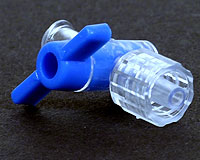
By far and away, though, I think the biggest contribution to avoiding needlestick injuries are the needleless infusion systems, using IV bungs (reflux valves) and Luer locks. Unfortunately many hospitals are too cheap to stock true Luer lock syringes (that twist and lock in) and just get Luer slip syringes. In that setting spray exposure from a loose fitting syringe-to-bung is rather common.

The needle and the blade will not disappear in the foreseeable future of open surgery. Needlesticks are and will still be a fact of life. I was recently offered specific "needlestick infection insurance", and on reading through the paperwork, the payout was a lump sum on confirmation of new-onset infection:
"A benefit will not be payable if: ... a medical cure is found for Acquired Immune Deficiency Syndrome (AIDS), or the effects of the HIV virus, Hepatitis B or Hepatitis C, or in the event of a treatment being developed and approved which makes these viruses inactive and non-infectious."
Even if such treatment is hideously expensive or years away from market availability?

"... you have AIDS or any AIDS related disorder or a positive blood test... unless you are able to provide evidence, in the form of sequence analysis of the source and index virus strains, satisfactory to us that the accident involved the definitive source of the virus."


Why would I be applying for this cover if I already had HIV? What kind of product do these guys think they are offering? I think I will rely on my Income Protection Insurance, so I have thrown it in the bin.